DIGGER

Lucky is the viewer who reads nothing about Digger before seeing it. Partly because, arriving at the screening, they won’t be expecting a divisive film that has split the community of film critics into two camps, and each individual critic into two smaller critics arguing with one another. Partly because they won’t have to hunt for the magic word narrative in the protagonist’s Texan accent. But above all because the twist revealing that Alejandro González Iñárritu’s theatrical, excessive film is actually about a theatre production is one of those wow moments when cinema comes closest to magic.
As though by a spell, we begin to notice: the actors really are overacting, it’s obviously theatre, all we were missing was the context. But don’t rush to bring up Kuleshov, we have a story of a production about manipulation and the construction of narratives at our hands, and the director skilfully weaves these techniques into his own film. In fact, this game with the audience begins much earlier, back with the trailers: to paraphrase Digger Rockwell, we have only seen the facts (individual scenes), but we don’t know the story yet.
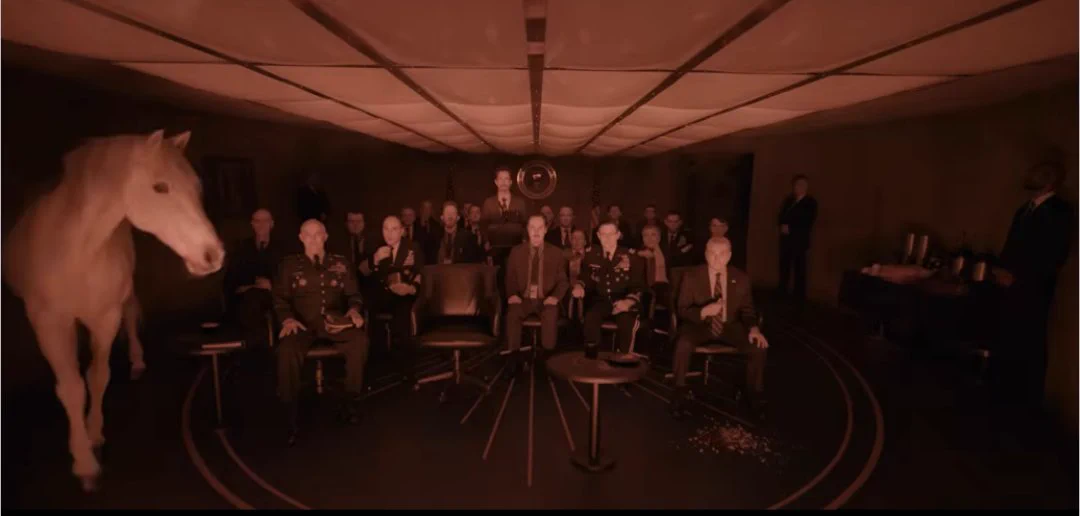
And he will do it again when Cruise’s actor-character denotes the film’s central problem: satire, we are told, is of dubious use; we can make villains look like fools all we like, but that way we will never understand them, which means we will never change anything. After this scene, the viewer, who has most likely spent the past hour and a half enjoying the unfolding farce, sees the light once more and watches the rest of the caricatured production from the heights of their newfound Spinozist ethics.
Iñárritu, of course, tries to dig deeper himself. Criticising wrong and harmful satire, he doesn’t say “watch how it’s done”, but tries to understand why it arises: this is what the storyline with the theatre production and Cruise as an actor is for. Yet this tentative investigation gets lost against Digger Rockwell’s story, crushed by the latter’s disproportionate running time, emotional intensity and visual force. Looking at the imbalance between a timid serious conversation (inserted as though to tick a box) and the pompous playacting the director clearly enjoys, you inevitably wonder: which of these gave rise to the film, and which was merely a fitting addition?
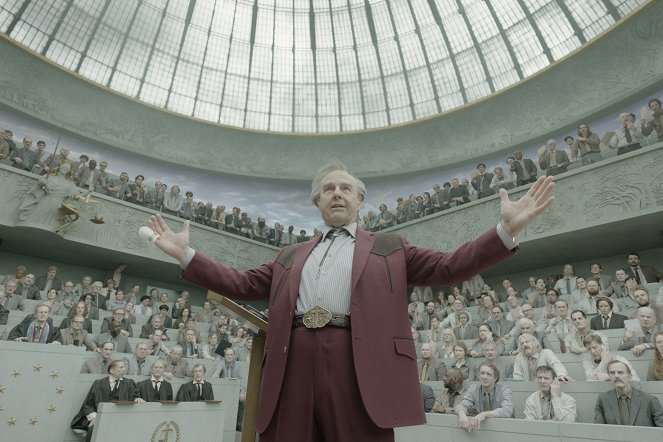
Be that as it may, the ultra-theatrical form of most of the film could hardly suit its content better. The production around which the plot revolves takes the form of satire on satire, and this level of artifice lets the director set himself no limits. Digger, elegantly protected from accusations of excess by its own structure, is full of caricatures of the caricatures of our time: in Digger Rockwell we recognise Mark Ruffalo’s Trump (Mickey 17), the dozing president played by John Goodman recalls the already grotesque Joe Biden, and Defence Secretary Fitzgerald looks like Sean Penn’s parody of Sean Penn’s already parodic character in One Battle After Another. Yet they all feel natural and in place as they exist in a carefully constructed world suited to them (and only them), which has absorbed the visual codes of The Phoenician Scheme, Poor Things and the NT stage adaptation of Dr Strangelove.
The film premiered in London’s West End, packed with theatres, in the presence of the royal family: a highly symbolic gesture. Its timeliness also works in favour of this attempt to create something more than a film. As though anticipating Primetime, which inappropriately turns a monster into a clown, the shamelessly frank Wild Horse Nine and Naza, or Ink and A Good Little Soldier, which painstakingly retrace the path to the present day, it joins the Venice Film Festival’s wider conversation about media, narrative manipulation and post-truth, while also passing judgement on these films in a manner of a film critic. The critics’ judgements on Digger, meanwhile, have been mixed, making its fortunes in the coming awards season all the more interesting to follow.