WILD HORSE NINE
A new era of shamelessness.
After seeing Martin McDonagh’s new film Wild Horse Nine, some critics declared that the director had been making the same film for years, and inevitably cracked jokes about “In Bruges Easter Island”. And indeed, what we have is a thoroughly McDonagh-esque story about McDonagh-esque characters having McDonagh-esque conversations and finding themselves in McDonagh-esque situations in the middle of a McDonagh-esque setting. The latter, however, feels fresher than ever, though it retains the familiar isolation and compactness combined with wide, empty spaces. Green, sun-drenched Easter Island looks much more cheerful than overcast Bruges or windswept Inisherin.
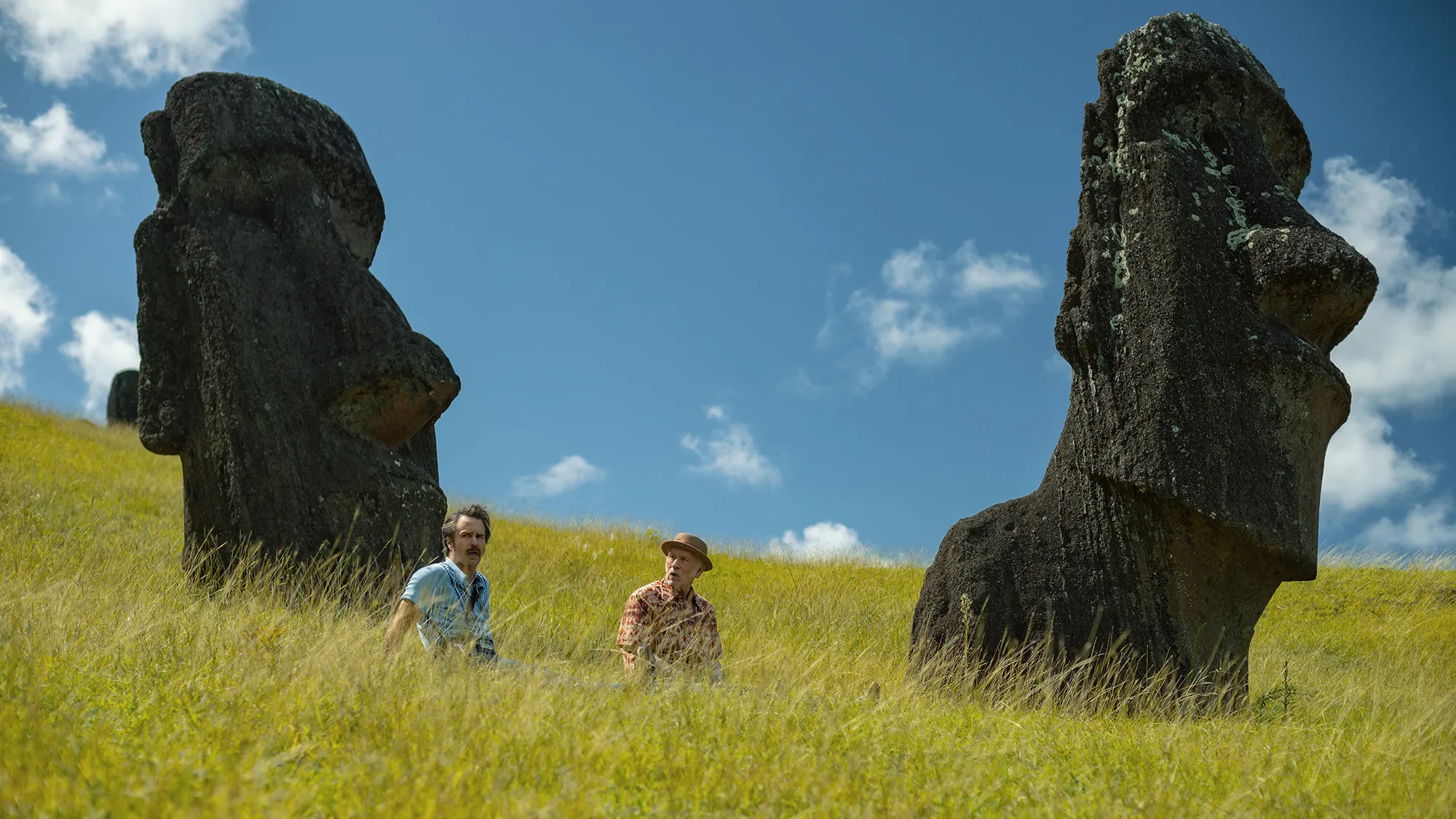
Perhaps this is why Chris, who is losing his memory, chooses it for his farewell journey: “remember, you’re dying”, reads a note he has left himself. John Malkovich’s terminally ill character spends his days wandering aimlessly, pondering about heaven and trying to write down the story of his life, though he is in no hurry to get on with the narrative: the opening chapter of his memoirs, for instance, is devoted to dinosaurs. (No, this isn’t a conspiracy theory about American intelligence, but when else will he get to talk about dinosaurs.) In fact there is plenty to write about: his long career in the CIA has left him with memories of a whole host of events so highly classified that his own boss, unforgettably played by Steve Buscemi, is hunting for information about them.
The whole film is built on contradictions, dissonance and emotional swings. McDonagh masterfully alternates and mixes hilarious dialogue with chilling details of American intelligence work: one moment the characters might be discussing cheese or moths, and in the very next scene sharing tips on making explosives and overthrowing heads of state who have become inconvenient. But whereas the director’s previous films punctuated personal drama with a regular chuckle, Wild Horse Nine raises the stakes, and the viewer keeps switching from contemplating problems of a global scale to uncontrollable laughter and back again.
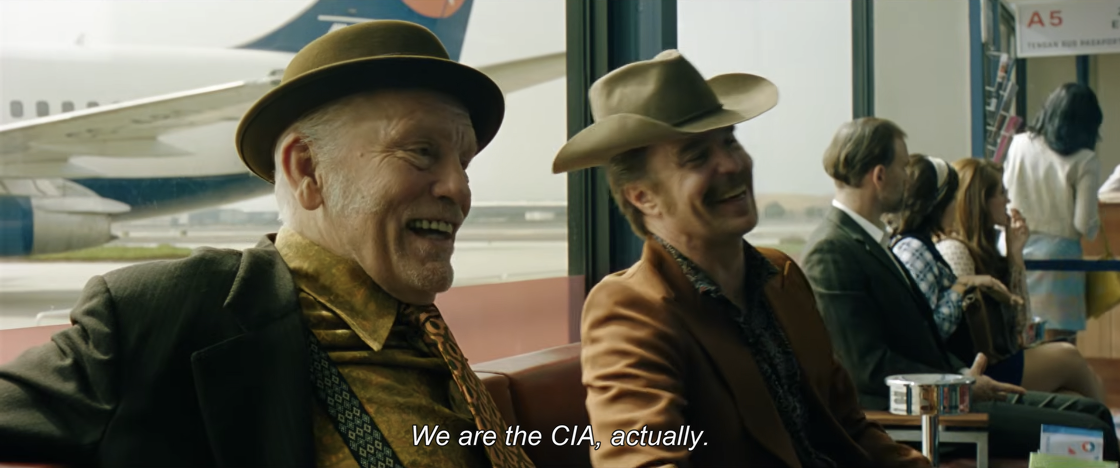
Despite his slow progress with the memoirs, Chris has no qualms about telling complete strangers things they shouldn’t and, it seems, wouldn’t want to know. To those he speaks to, these revelations seem more like senility, or at best cruel jokes; the viewer can only sit stunned at the ease with which he describes, for instance, the military coup being prepared in Chile.
What is most daunting is that we inevitably recognise ourselves in these frightened little people brushing aside uncomfortable truths, since we too live in times that Slavoj Žižek aptly describes as “a new era of shamelessness”: what was once considered unacceptable, shameful, compromising is no longer hidden from us, because there is no longer any need. Do we have the strength to produce a meaningful response? Chris, offering options for resistance of varying degrees of radicalism and personal involvement, cynically declares that all of them are doomed to fail. But perhaps it is time for the townsfolk to stop believing the Dragon?