Artificial
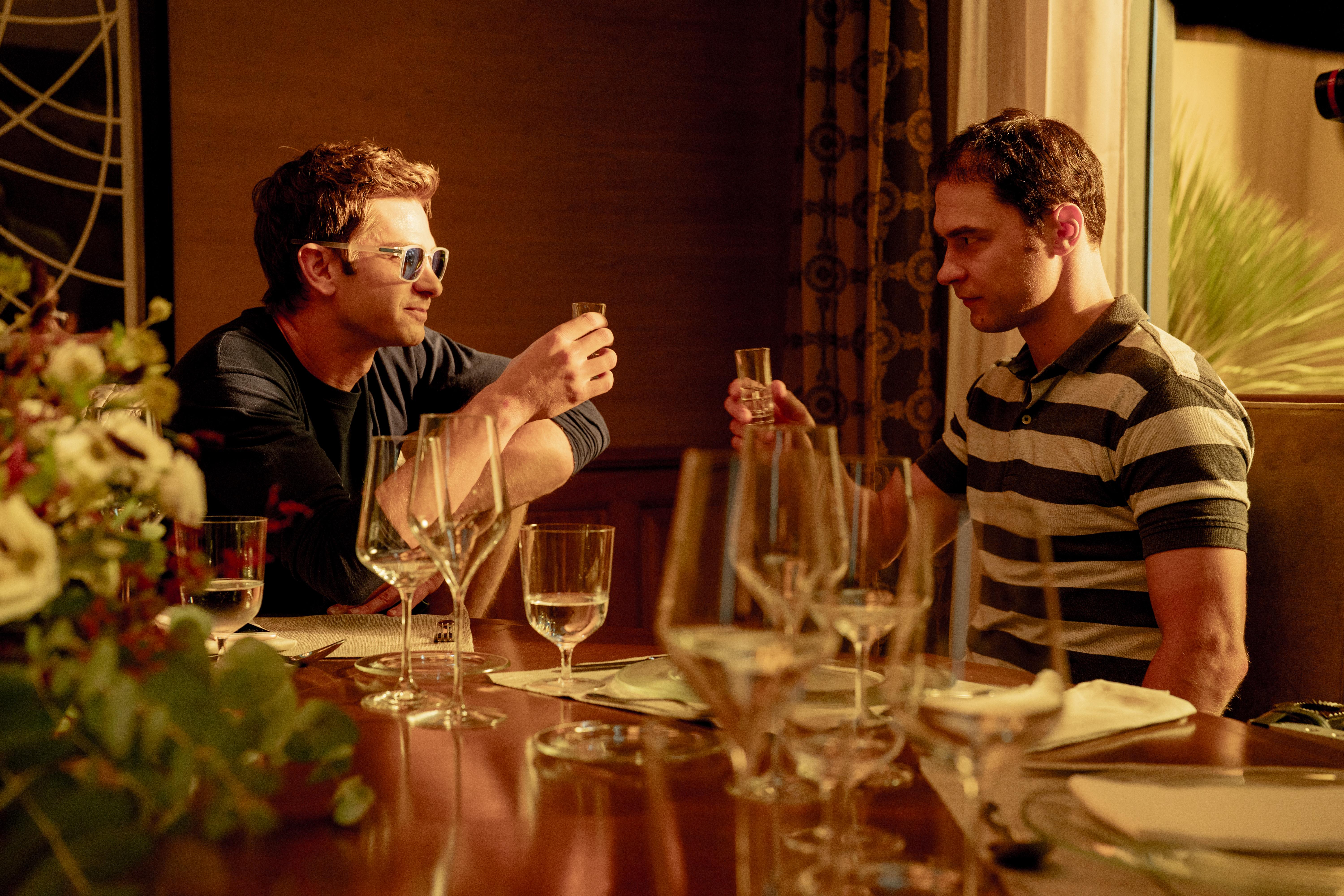
In the international cinema world, Yura Borisov inhabits the role of an alien: unfamiliar with his surroundings and distinctive in appearance, he makes himself understood in the local language as best he can and invariably ends his short speech with a shy chuckle. There’s more he could say, but once you’ve jumped the language barrier, you find new ones, much higher. Ilya Sutskever descends on a University of Toronto professor as if from distant planets (in fact, the USSR and Israel) and, though he speaks English, thinks in the mysterious language of mathematics. Over the course of the film, we hear the same technology explained in various terms, from cryptic “gradients” and “optimisers” vetted by consultants to “it’s alive” and “black box”, rather tacky but crystal clear even to a child.
The subject, of course, is artificial intelligence, and the title missing one of the words is not a mistake – the sense of artificiality here actually comes first and foremost from Sam Altman (Garfield). While Ilya works in earnest and believes in a better future for us, trying along the way not to become another Oppenheimer (how thin is the line), his charismatic, carefree friend merely keeps up appearances of alignment: in practice, safety concerns interest him only so long as they don’t get in the way of business. “I’m incapable of lying. Do you lie?” Sutskever asks at their first meeting. “When necessary, for the greater good,” Altman replies in true American fashion.
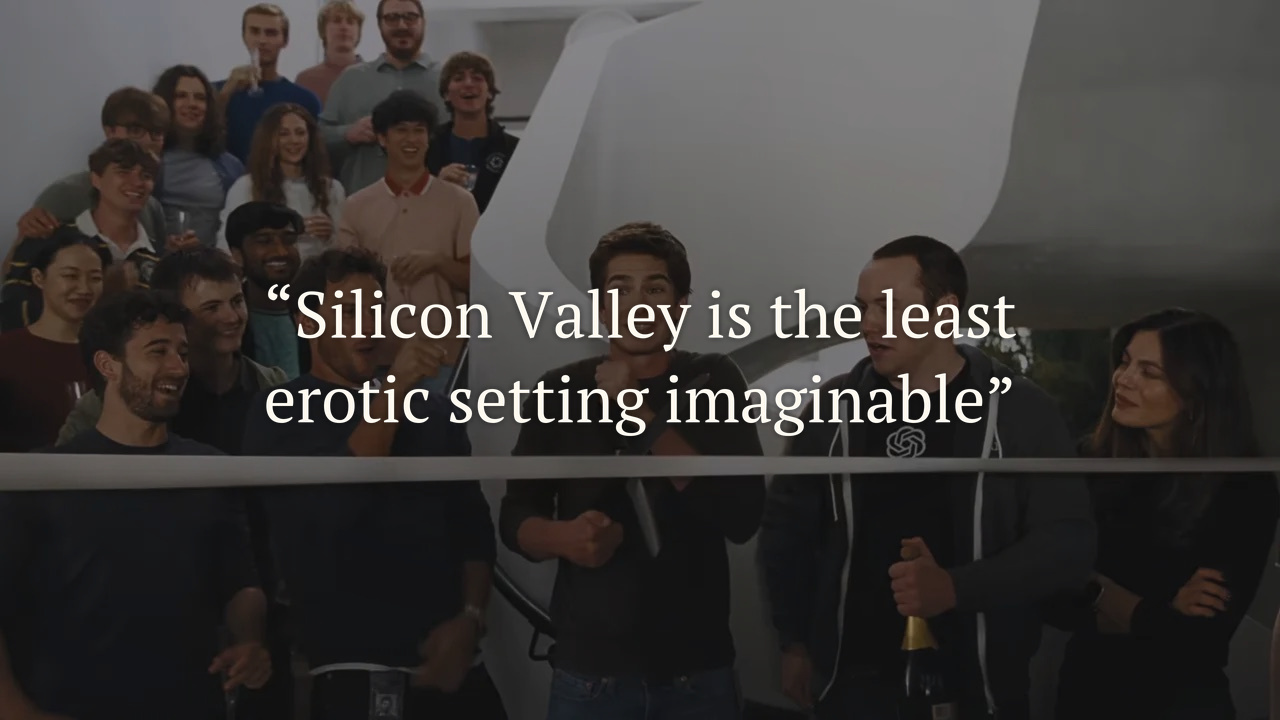
“Making a film like this is hard. Silicon Valley is the least erotic setting imaginable,” the director complains. He manages it by bringing the techniques of a sports drama into the tedious world of mathematicians and engineers: highs and lows, team dynamics, personal stakes, constant tension. A dozen eccentric dreamers nobody believes in sit around a table, but they’re about to turn the world upside down. How exciting! A dozen eccentric dreamers nobody believes in sit around a table, and they’re about to turn the world upside down. How frightening!
Guadagnino ends the story with the events of 2023; by the standards of the AI world, an eternity has passed since then. But unlike Sorkin (The Social Reckoning), he tells a timeless story in a contemporary setting. Ilya’s moral anguish is no fault of the era; his opponents are as (arche)typical as he is, and dozens of decent people and hundreds of weak ones have already faced his choice. Where do you find the strength to make the right choice? Is it even possible? And which choice is right, anyway? Humanity has yet to find the answers. We can only hope we have enough time to work it out.
Done! If you like, I can make the text livelier and more natural — depending on which style you prefer.